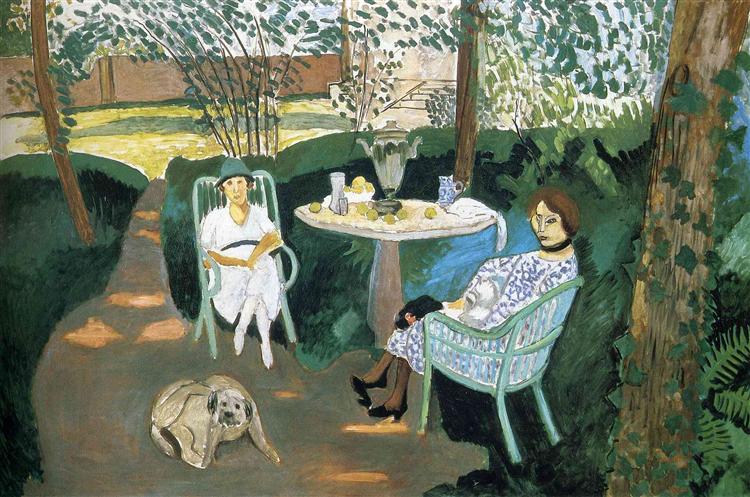
For years, I struggled to learn English. Every day I would sit in front of the mirror in my bedroom, pick some words, relax my tongue, stretch my lips, howl a while, then repeat: squir-rel, tho-rough, through-out. As I did, I revved, roared and spittled. The words came out like a slurry of mashed marshmallows (marsh-ma-llows). I was ready to give up. After all, better warriors have kneeled before lesser foes. But I needed to know English to talk to my dog. I had bought one of these short-legged and long-eared pooches—a “King Charles Spaniel” (called Emma). I tried telling her “Assise!”, “Couchée!”, “Debout!”, but nothing ever worked. She stared expectantly into my eyes, her tongue lolling out, waiting for still holier words to come out of my mouth, doing absolutely nothing. Although she understood none of them, she wrapped her adoring mind around each and every syllable. Every time I looked into her blissful face, I could see that the one active braincell was travelling frantically from her right hemisphere to the left and back, opening every dictionary it had around and coming back empty-handed. That is when I realized that, maybe, a King Charles Spaniel speaks only English—hence the “King Charles” part. So, I started learning English: squir-rel, tho-rough, through-out.
When I finally reached my wit’s ends, still unable to pronounce those treacherous “th,” I decided to try drinking tea. That is what the English do, and they speak English. I had come to the conclusion that the tea must somehow alter their throat, gulp after gulp. I drove to the supermarket, and bought the most propitious variety: English Breakfast, from an equally English-sounding brand. Then, I went home, boiled some water, poured the content of the entire canister of tea in it, and let the cramped mixture seep for an hour. The stronger, the better. Under the enthusiastically attentive eye of the dog, I filled just a small mug with my black decoction and froze the rest. Immediately, I started taking a daily glass of the stuff, ger—gur—gargling above my sink, spitting victoriously, brushing my teeth with some paste mixed in tea, sometimes also brushing Emma’s teeth with it for good measure, and waiting for my throat to become Englified.
One day, as I was sitting on the couch, looking at David Attenborough cooing for a bird of paradise and making even more mysterious sounds to his camera people, I suddenly felt my tongue sing, parched for the knowledge of others, uncontrollably pulled by the urge to speak. I turned to my King Charles Spaniel: “Diana, the honor of the nation is at stake! No, we cannot be through! If you leave, I am thoroughly screwed!” This was nothing short of a miracle—never before had I had managed a whole sentence in English. Though I did not understood a word of what I had just said, and felt like the dog probably did whenever he heard my French orders, I now demonstrably spoke English, even if I did so independently of my own will. I was becoming a voluble Shakespeare, a veritable Tobermory. Sha-ke-speare, To-ber-mo-ry.
But this did not seem to help Emma in the least. I could point to the floor and tell her to “Sit!”, and she would lick my finger while jiggling in place, with rapturous but confused eyes. Was she deaf? I promptly took her to the veterinarian, who furrowed a dubious eyebrow and said that nothing was wrong with her. On the way home, as she aired her ears through the window of the car and sang an ardent and deafening aria on the glory of the world, I wondered if, maybe, I had bet on the wrong language. So, I went to the supermarket and bought some premium kibble. Then, in the secrecy of my kitchen, I ground it, seeped it, and drank it. Kibble-coffee (patent now pending) is a bit bland, granular, slushy, and slightly nauseous. Yet, it is infinitely better than kibble-cake. In fact, I have so far found no better way to ingest these dry dog pellets—although I am still working on a way to smoke them.
Now, Emma and I converse regularly. Woof.

